BB / INDEX
001 / INDEXUNITED STATES
AVAILABLE

BENBRACAMONTE

Games, tools, and small strange machines for the browser.

Ben Bracamonte is a full-stack engineer working in TypeScript, Rust, React, Next.js and Postgres. The projects here span agent systems, realtime product engineering, GPU simulation and games.

FULL-STACK ENGINEER·SHIPPED PROJECTS
002

SELECTED WORK

Things I've shipped.

Featured projects, each with a full case study. Click a title to read how it was built.

01OCT 2026IN PROGRESS

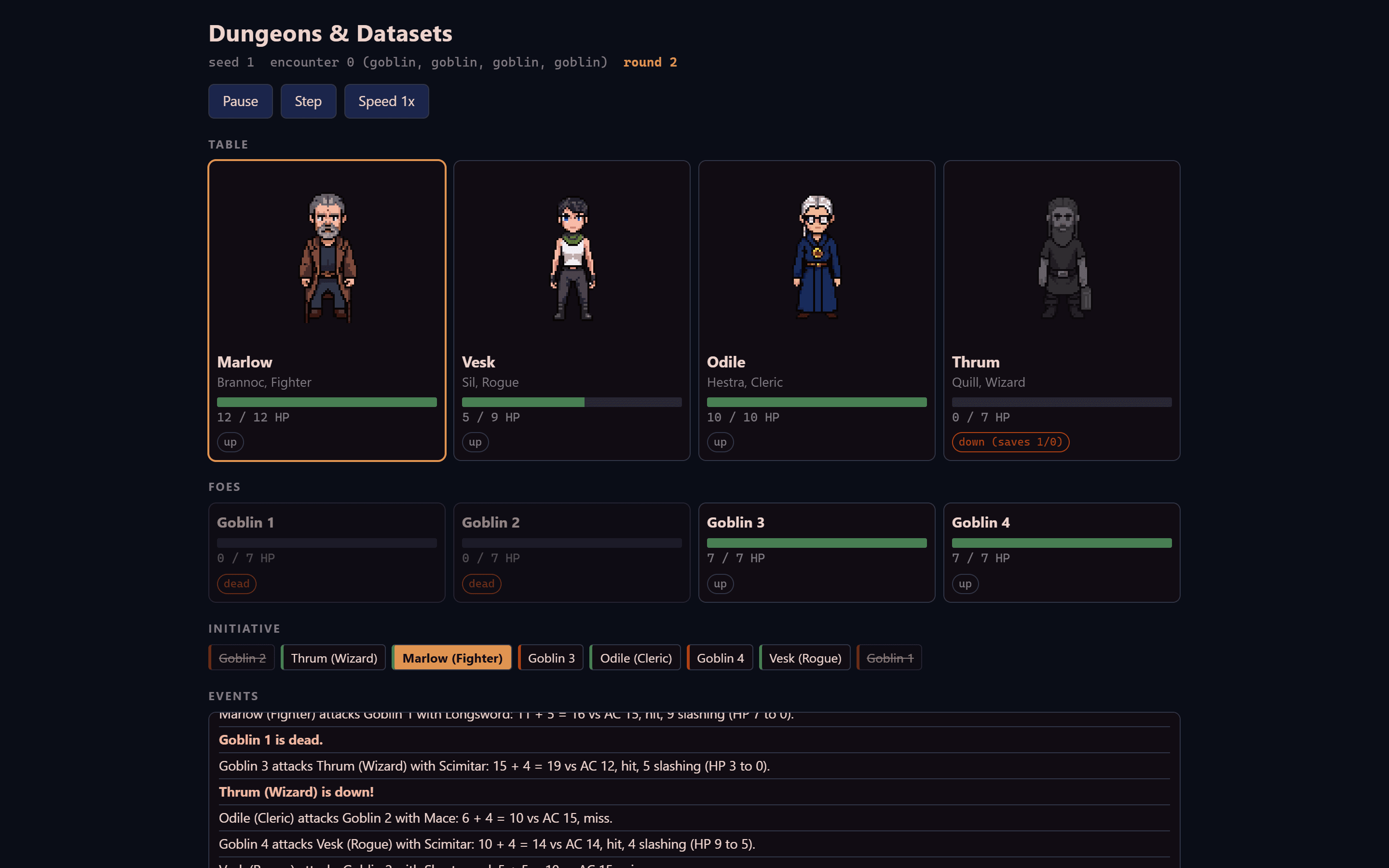
A D&D campaign run by software. AI models play the party and the dungeon master, and a seeded rules engine decides every outcome. Model calls are recorded, replayed for free and capped by a daily ledger. The public page replays one seeded combat in the browser.

  • TypeScript
  • Node
  • Anthropic SDK
  • MCP
  • WebSocket
  • Docker
  • Vite
READ CASE STUDY →LIVE ↗
02JUL 2026LIVE

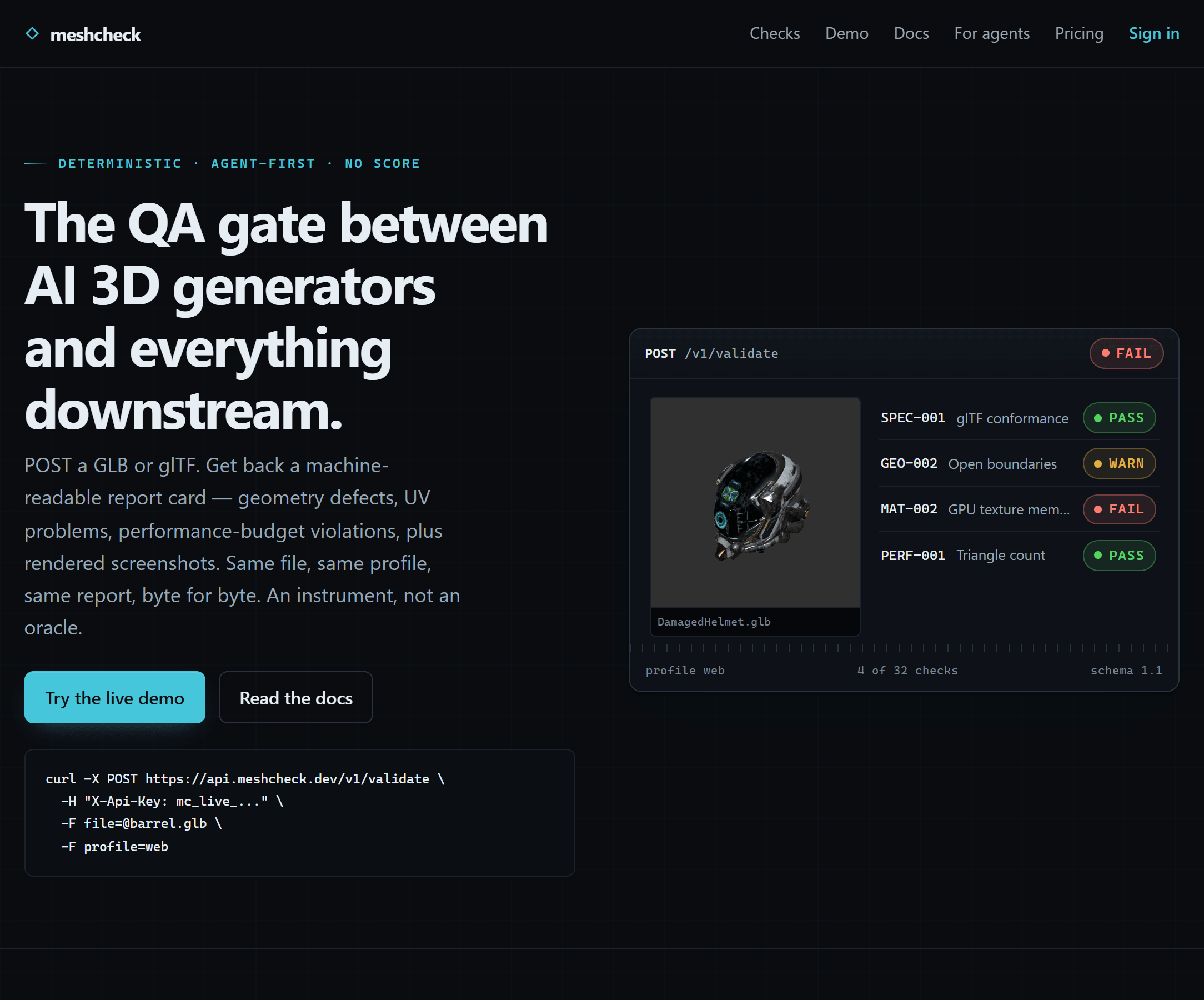
A validation API for 3D assets. POST a GLB, get a per-check report and rendered screenshots: pass, warn or fail per check, never a score. One Rust core runs as WASM in the hosted API and as a native binary locally, and a gate checks both give the same report.

  • Rust
  • WASM
  • TypeScript
  • Vercel Functions
  • Playwright
  • Astro
  • Neon Postgres
  • MCP
READ CASE STUDY →LIVE ↗
03JUL 2026LIVE

A particle-effect editor for PixiJS games. The editor previews through the same MIT runtime your game ships, so what you author is what renders, and golden-frame tests in CI catch drift. 71 presets ship, all CC0.

  • TypeScript
  • PixiJS
  • Preact
  • Signals
  • Vite
  • Playwright
READ CASE STUDY →LIVE ↗REPO ↗
04OCT 2026LIVE

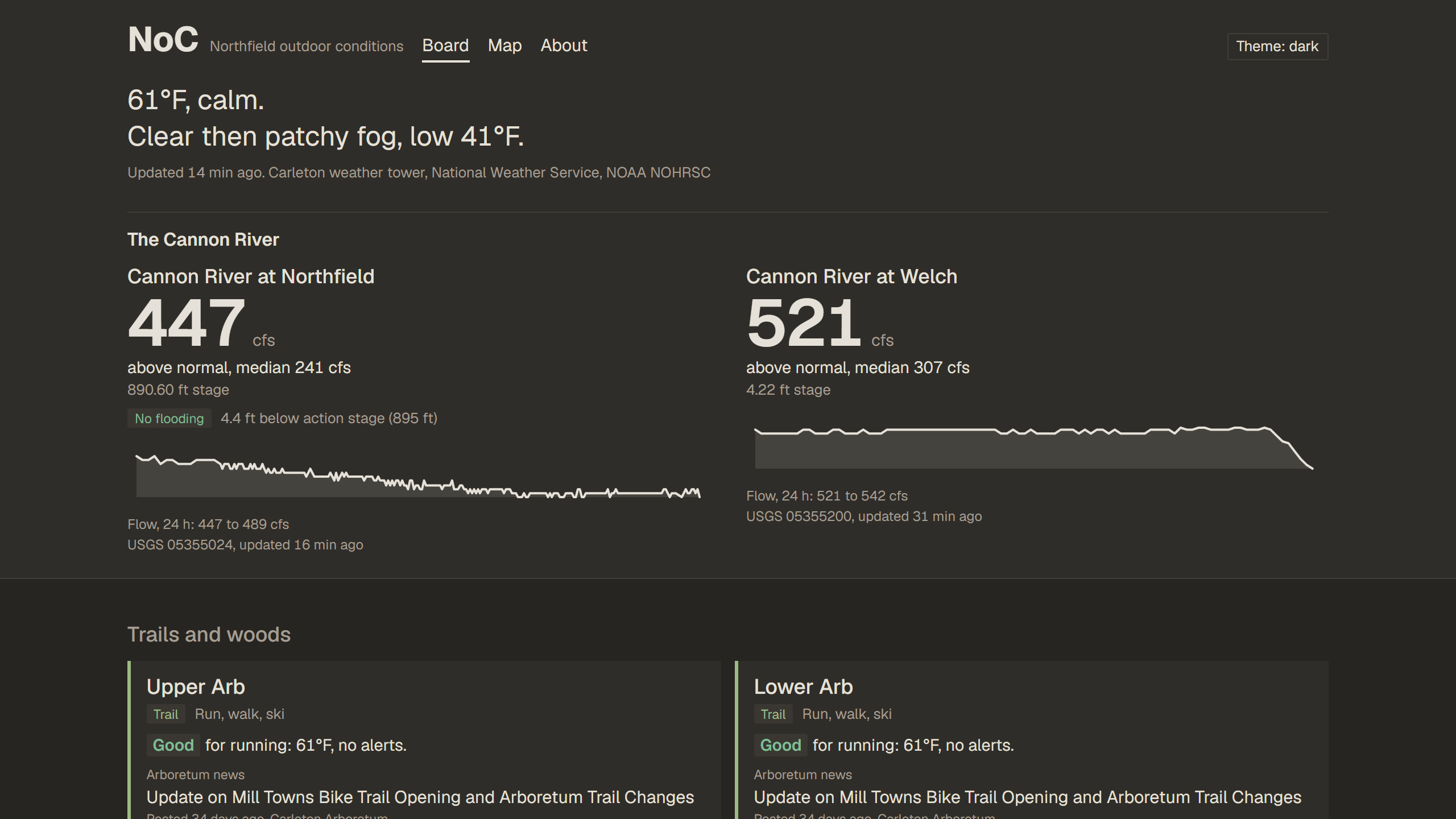
Outdoor conditions for fifteen trails, rivers, lakes and parks around Northfield, Minnesota. Thirteen public feeds are polled on Vercel Cron, every reading is stored in Postgres, and each venue card opens with a verdict for its main activity.

  • Next.js
  • TypeScript
  • Supabase
  • Postgres
  • Vercel Cron
  • Playwright
READ CASE STUDY →LIVE ↗
05JUL 2026PAUSED

An orbital takeover game. A lone ship circles an inhabited planet, dropping payloads to convert it region by region while evading defenses that escalate. Arcade rules: no maneuver nodes, no n-body physics. The planet, with its atmosphere, city lights and ocean glint, renders in real time on WebGPU.

  • TypeScript
  • Three.js
  • WebGPU
  • TSL
  • Vite
READ CASE STUDY →LIVE ↗
06JUN 2026LIVE

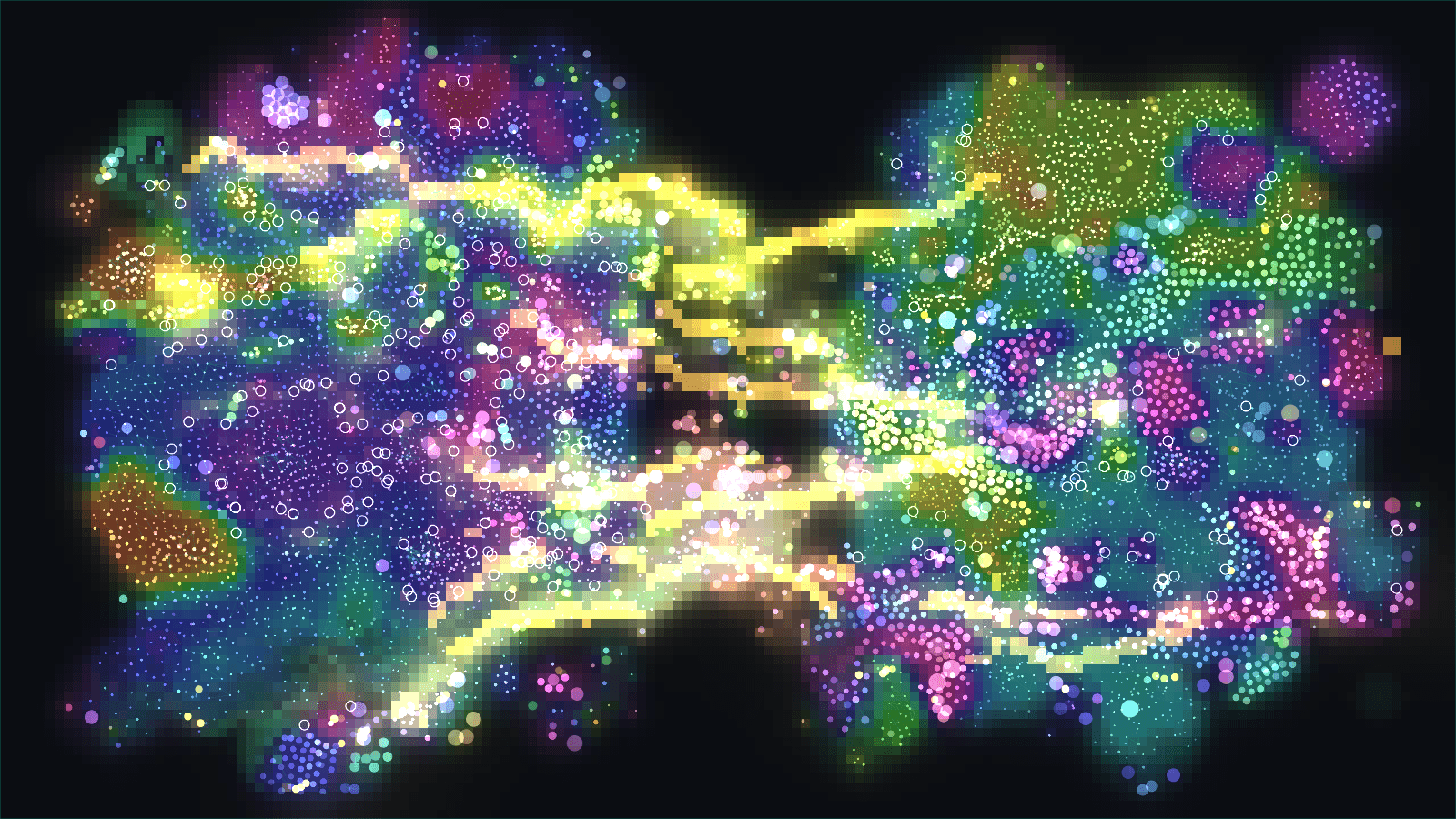
An artificial-life god game. Up to 20,000 agents forage, breed and die in a closed world. Behavior and body come from a genome, and the only selection pressure is the environment. The structure-of-arrays sim was ported from CPU to WebGPU compute against one fixed buffer contract.

  • TypeScript
  • WebGPU
  • WGSL
  • PixiJS
  • Vite
  • SoA
READ CASE STUDY →LIVE ↗REPO ↗
003

OTHER WORK

Side projects and experiments.

Smaller builds, mostly games. Some are finished, some are still in progress.

  • Crawlers preview
    07APR 2026ARCHIVED

    Crawlers

    Server-authoritative dungeon crawler. Procedural floors, D&D-adjacent combat, real-time multiplayer. Archived; no longer hosted.

    MORE about Crawlers

    A single-player-first dungeon crawler on a server-authoritative architecture. The C# server holds canonical state; the React and Pixi.js client sends intent and renders what it is told. Co-op for 1-4 players arrived later and extended that architecture rather than replacing it.

    C# · ASP.NET Core · SignalRREPO ↗
  • Presswork preview
    082026LIVE

    Presswork

    Four AI agents that run an Etsy print-on-demand pipeline, handing off through a shared Postgres schema. A person approves every listing before it goes live.

    MORE about Presswork

    Four AI agents that run an Etsy print-on-demand pipeline: trend discovery, artwork generation, listing, and margin tracking. They hand off through a shared Postgres schema, so each stage runs and is inspected on its own, and a person approves every listing before it goes live.

    Python · TypeScript · Claude API
  • Outpost preview
    09SEP 2026IN PROGRESS

    Outpost

    A co-op horde-defence prototype designed for 20,000 enemies, on a float-free Rust-to-wasm lockstep sim fed only player commands.

    MORE about Outpost

    A co-op, top-down horde-defence game in the spirit of They Are Billions: builder avatars hold one shared base against a bug swarm. The design targets 20,000 simultaneous enemies, so multiplayer is lockstep: a native Rust tick server orders each tick's player commands and broadcasts them, and every client steps its own copy of the deterministic sim. A late joiner gets the tick history, or past 600 ticks one state snapshot, then the live command stream.

    The sim was built twice behind one interface, in TypeScript and in Rust compiled to wasm, as a bake-off; the Rust sim won and the TypeScript one was retired. Floats are kept out of the sim by build errors: clippy rejects f32 and f64 in the crate and a wasm scan fails on any float instruction.

    A determinism harness runs the same command logs in Node and in headless Chromium, Firefox and WebKit and compares tick-final hashes. The PixiJS client only reads sim state and events.

    Rust · WebAssembly · TypeScript
  • Manaless preview
    10JUN 2026LIVE

    Manaless

    Try-before-you-buy for paper Magic: the Gathering. Swap cards in a real published decklist, export it to play against XMage's AI, then buy only what is missing.

    MORE about Manaless

    A try-before-you-buy funnel for paper Magic: the Gathering. Start from a real published decklist, swap cards while win conditions and an inferred power bracket recompute, export a .dck file XMage loads so the list can be played against its AI, then diff against your collection and buy only what is missing. The hosted demo serves a pre-seeded set of commanders, and a commander outside it depends on a live upstream fetch. Locally nothing is seeded: every commander is fetched live from EDHREC, self-rate-limited to one request per 0.8 seconds and cached to disk.

    Python · FastAPI · HTMXVISIT ↗
  • Mergecraft preview
    112026LIVE

    Mergecraft

    LLM retrospectives across PRs, as a static SPA with no backend: the key you paste lives in this browser's localStorage and is sent straight to the provider.

    MORE about Mergecraft

    LLM-powered retrospectives across pull requests. It runs as a static SPA with no backend: the key you paste lives in this browser's localStorage and is sent straight to the model provider, which the public source and the network tab both show. The app states the cost of that plainly: anything able to read localStorage can read the key.

    Angular · TypeScript · Claude APIVISIT ↗
  • Swarmr preview
    12JUN 2026LIVE

    Swarmr

    Browser bullet-heaven built around one number: the swarm ramps to 2,500 live enemies and holds there, against a per-frame budget of 4 ms logic and 8 ms render.

    MORE about Swarmr

    Browser bullet-heaven built around one number: the swarm ramps to 2,500 live enemies and holds there, against a budget of 4 ms of logic and 8 ms of render per frame. An always-on overlay reads out both plus the live enemy count, and a dev-menu slider pins the swarm size anywhere up to 2,500, so the number is checkable in the running game. Entities live in typed-array pools and collision runs off a uniform grid, both chosen to keep per-frame allocation off the hot path.

    TypeScript · PixiJS · ViteVISIT ↗
  • Stickr preview
    13MAY 2026LIVE

    Stickr

    A kid's wall sticker chart, mirrored across two parents' phones. One tap awards a sticker to a shared board, and offline taps queue and sync.

    MORE about Stickr

    A kid's wall sticker chart, mirrored across two parents' phones. One tap awards a sticker to a shared board, offline taps queue and sync, and a Postgres constraint keeps a reward from being redeemed twice.

    React · TypeScript · SupabaseVISIT ↗
  • The Fallen Four preview
    142026LIVE

    The Fallen Four

    A real-time party RPG with permadeath. The simulation is deterministic and seeded, walled off from the PixiJS and React render layer by one-way snapshots.

    MORE about The Fallen Four

    A real-time party RPG with permadeath. Auto-attacks fire on their own, but every ability is a command the player queues, drained in a fixed order at the next tick boundary. The simulation is deterministic and seeded, walled off from the PixiJS and React render layer by one-way snapshots.

    TypeScript · PixiJS · ReactVISIT ↗
004

ABOUT

Who I am.

PROFILE

I build fast, opinionated interfaces that don't look like everyone else's.

Full-stack engineer with a background in visual art. I care about the details where design and engineering meet, and I'd rather ship an interface that feels considered than one that merely works.

Lately I've been building production software where correctness matters more than novelty.

STACK

TypeScript · React · Next.js · Node · Postgres

ALSO COMFORTABLE WITH

Rust, Python, Three.js, Pixi.js, WebGPU, C#

WORKING STYLE

High context, light process. I ship often and review carefully.

005

HOW I BUILD

Plan, gate, tag.

METHOD

Most of the larger projects on this page are built as numbered milestones, each with a written plan and a stop condition, and each ending in a tag. The tags in those repositories show what was finished and when.

A planning session writes the plan and reviews the results. A fresh subagent implements one milestone at a time, and a separate reviewer re-runs the gate before the milestone is tagged.

Tests that carry real weight get a sabotage run. I break the code the test is meant to protect and confirm the test fails.

231

231 tagged milestones across 9 repositories, counted 2026-10-19.

006

CONTACT

Get in touch.

Email is the fastest way to reach me. Tell me about the role, the team, and what you're building.